
Tag Archives: Turkology

Obituary: Lars Johanson (1936–2025)

In Memoriam

Lars Johanson (1936–2025)

Lars Johanson, a linguist of Swedish origin, played a decisive role in establishing the study of the Turkic languages as a modern linguistic discipline. In addition to his substantial contributions to Turkic linguistics, his general linguistic work—above all in language typology—is of great significance. The theoretical models he developed for the investigation of verbal aspect systems and contact-linguistic phenomena have been applied to numerous languages.

Lars first joined PIAC in 1969, Berlin, his next fruitful participation was in 1987, Bloomington. At the 1988 Weimar meeting, he was elected to the Medal Committee. He gave a lecture at the Oslo meeting in 1989 and another in 1990 at the Budapest meeting. His vivid talks on different linguistic subjects also through breaks and excursions remain in the memory of many of us.

Lars Johanson was born on 8 March 1936 in the town of Köping in central Sweden. He pursued his university studies at Uppsala, in Germanic, Scandinavian, Sanskrit and Slavic studies, in Turkology and general linguistics. He received his B.A. in 1959 and his M.A. in 1961. In 1959–1960 he frequented Oriental studies in Vienna. From 1960 onward he finally devoted himself to the Turkic languages. In 1966 he obtained his doctorate at the University of Uppsala, followed in 1971 by the Habilitation on the basis of his studies in Turkic linguistics. His 1971 monograph Aspekt im Türkischen met with wide recognition in linguistic circles.

In the following years he pursued intensive research and travelled to numerous Turkic-speaking countries as well as to China. In 1979–1980 he was a visiting professor at the University of Frankfurt, and from 1981 at the University of Mainz. At the latter he was appointed full professor in 1982, in the highest German professorial category, C4. Alongside his research and teaching at Mainz, from 1985 onward he edited the highly successful monograph series Turcologica  at the Harrassowitz publishing house in Wiesbaden, a series in which more than 130 volumes have appeared to date. From 1995 he founded and edited there the journal Turkic Languages, which had reached its 29th volume by the time of his death.

Between 1966 and 2025 he published more than 500 works. Among the books he brought out in the last years of his life, the most important is Turkic, published by Cambridge University Press in 2021, a monumental comparative description of the Turkic languages. This unparalleled handbook is to appear in paperback in 2026. His theory of verbal aspect is presented in his book Aspect in the Languages of Europe, published in 2023, in which Johanson demonstrates that the theoretical framework he developed for the description of the Turkic verbal system is also eminently suitable for an adequate and innovative analysis of the verbal systems of the European languages. His contact-linguistic model is set out in his 2023 book Code Copying. The Strength of Languages in Take-over and Carry-over Roles. Besides presenting the model, this book aims to show that copying from other languages does not “corrupt” the recipient language; on the contrary, it can serve as a means of survival for endangered among the Turkic languages.

Throughout his career he was deeply engaged with the linguistic testimony of early Turkic texts written in non-Arabic scripts. His last book, published in 2025 together with his wife, Éva Á. Csató, is an edition of a seventeenth-century Latin-script Bible translation into Azeri.

Johanson continually expanded the online edition of the  Encyclopedia of Turkic Languages and Linguistics (Brill), a work he himself initiated and edited, which is to comprise several hundred articles. In future its editorship will be taken over by Éva Á. Csató.

He was an excellent teacher much beloved and followed by his pupils. He pursued his teaching with great enthusiasm and dedication. The fruits of this are visible in the fact that most of his doctoral students now hold professorships in various countries, continuing and further developing their supervisor’s work in the study of the Turkic languages.

As an internationally recognized scholar he served as visiting professor or researcher in many countries: in Tokyo, Kyoto, Melbourne, Beijing, Istanbul (at Boğaziçi University), Yakutsk, and at the Swedish Collegium for Advanced Study in the Social Sciences in Uppsala. Dearest to him, however, was his rich and enduring relationship with the Department of Altaic Studies at the University of Szeged. It was there that he was awarded an honorary doctorate in 1999.

On 24 November 2025, Lars Johanson laid his head down for eternal rest. His colleagues and pupils around the world will preserve his memory.

András Róna-Tas
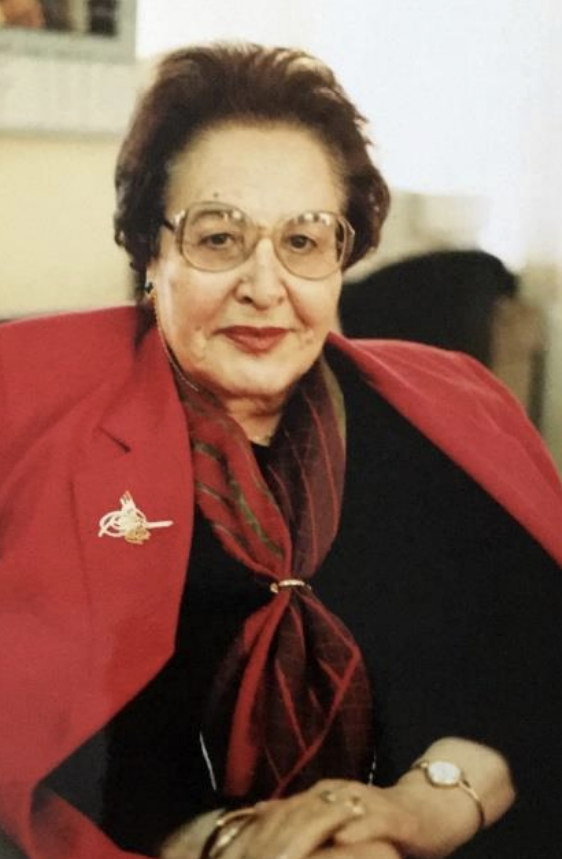
Obituary: Zeynep Korkmaz (1922–2025)

Zeynep Korkmaz
July 5th, 1922 – February 6th, 2025

Zeynep Korkmaz

Zeynep Korkmaz

Born in Nevşehir and raised there until elementary school, Zeynep Korkmaz completed her primary and secondary education in Urla and İzmir after her family moved to İzmir. She then moved to Ankara for her higher education and enrolled in the Department of Turkish Language and Literature in the Faculty of Language, History, and Geography (Dil ve Tarih-Coğrafya Fakültesi) at Ankara University in the 1940–1941 academic year. During her studies, she was a student of renowned linguists such as Hasan Eren, Saadet Çağatay, Tahsin Banguoğlu, and Besim Atalay. After graduating from university in 1944, Zeynep Korkmaz (her maiden name was Zeynep Dengi) first became an assistant at the Gazi Eğitim Enstitüsü (Gazi Education Institute) and then at the Faculty of Language, History, and Geography in 1948.

While working as an assistant, Zeynep Korkmaz conducted fieldwork on the dialects of Western Anatolia. During this period, she married Mehmet Korkmaz and had a son in 1950. Her doctoral thesis, based on her fieldwork, was published under the title Southwestern Anatolian Dialects (Phonetic).

In 1954, she was sent to Hamburg, Germany, with the faculty’s budget. There, she took courses from A. von Gabain and O. Pritsak. She returned to Turkey in 1955 and became an associate professor the same year. In 1963, she was appointed professor with her work Nevşehir ve Yöresi Ağızları (Dialects of Nevşehir and its Surroundings).

In the following years, she continued her work on linguistics, Turkish suffixes, and the Turkish language reform. In addition, she conducted studies on Old Ottoman Turkish, Oğuz languages, and Oğuz Turkish, publishing the Old Ottoman Turkish Marzubannâme.

She taught not only at Ankara University but also at Hacettepe and Gazi Universities during various periods. In addition to her academic duties at the university, she also held various administrative positions in academic institutions, the Turkish Language Association (TDK), The Council of Higher Education (YÖK), and Turkish Radio and Television Corporation (TRT). She participated in numerous conferences in Turkey and abroad with papers on Turkish language and culture. Zeynep Korkmaz, who has received many awards, received the PIAC Medal in 2003. Although she ended her teaching activities at universities in the early 1990s, she continued to participate in national and international Turkology conferences until the end of the 2010s.

Zeynep Korkmaz participated in well over a dozen Annual Meetings of the PIAC, her earliest participation on record was at the 12th Meeting in Berlin (1969), the title of her paper being “Die Frage des Verhältnisses der anatolischen Mundarten zu ihrer ethnischen Struktur.” At the 29th Meeting of the PIAC in Tashkent (1986), she was the head of the Turkish delegation.

When Zeynep Korkmaz is mentioned, the first things that come to mind are her contributions to the grammar of Turkish, the grammar book she prepared, and her pioneering work on Anatolian dialectology.

Mehmet Ölmez
October 2025

Selected Works

Güney-Batı Anadolu Ağızları Ses Bilgisi (Fonetik), AÜ DTCF yayınları: 114, Ankara 1956 (2nd edition, Ankara 1994, TDK).

Türk Dilinin Tarihi Akışı İçinde Atatürk ve Dil Devrimi, AÜ DTCF yayınları: 147, Ankara 1963.

Nevşehir ve Yöresi Ağızları, I Cilt: Ses Bilgisi (Phonetique), AÜ DTCF yayınları: 142, Ankara 1963; 2nd edition, Ankara 1977; 3rd edition, Türk Dil Kurumu, Ankara 1994.

Sadrü’d-din Şeyhoğlu, Marzubân-nâme Tercümesi, Giriş- İnceleme-Metin-Sözlük-Tıpkıbasım, AÜ DTCF yayınları: 219, Ankara 1973; 2nd edition, Türk Dil Kurumu, Ankara 2017.

Gramer Terimleri Sözlüğü, Türk Dil Kurumu, Ankara 1992.

Türkiye Türkçesi Grameri: Şekil Bilgisi, Türk Dil Kurumu, Ankara 2003.

Türk Dili Üzerine Araştırmalar, Türk Dil Kurumu, Ankara 1995.

Festschriften

Prof. Dr. Zeynep Korkmaz’a Armağan, Türk Kültürü Araştırmaları, vol. XXXII, 1994, Ankara 1996.

Zeynep Korkmaz Armağanı, Türk Dil Kurumu, Ankara 2004.

Türklük Biliminin Ulu Çınarı Zeynep Korkmaz Armağanı, ed. Leylâ Karahan, Türk Kültürünü Araştırma Ensitüsü, Ankara 2017.

Articles about Zeynep Korkmaz (also used for this obituary)

Hamza Zülfikar, “Hocam Prof. Dr. Zeynep Korkmaz”. Zeynep Korkmaz Armağanı, Ankara 2004: 1–24.

Leyla Karahan, “95 Yılı Geride Bırakmış Bir “Ulu Çınar”ın Hayat Hikâyesi”. Türklük Biliminin Ulu Çınarı Zeynep Korkmaz Armağanı. Ankara: Türk Kültürünü Araştırma Enstitüsü, 2017: 3–12.

Leyla Karahan, Türkçeyle Yaşamak, Zeynep Korkmaz Kitabı. Ankara: Bengü Yayınları, 2018.

Leyla Karahan, “Hocam Prof. Dr. Zeynep Korkmaz’ın Ardından / After the Passing of My Professor, Prof. Dr. Zeynep Korkmaz”, Dil Araştırmaları / Journal of Language Studies, Year: 19, Period: 2025- Spring, Number: 36: 271–278.